More evidence of the effectiveness of the growing protest movement is the recent enacted of “responsible banking ordinances” in several cities, including Los Angeles and New York. On Tuesday, May 15, the LA City Council voted 13-0 to require any commercial bank wishing to hold city deposits to submit an annual statement of community reinvestment activity in the city, including the number, size and type of small business loans, home mortgages, home improvement loans, community development loans, and banks’ participation in the City’s foreclosure prevention and home loan principal reduction programs. Activist groups can use the information to develop a “report card” on banks that could push the city government, unions, churches, foundations and others to remove their deposits from banks with poor grades. A year ago, the proposal, sponsored by City Council member Richard Alarcon, died on the vine for lack of support. But this year, in the wake of the Occupy movement, Alarcon resurrected the ordinance, which quickly gained momentum, despite the opposition of LA’s banks and business community. The grassroots campaign for the ordinance was led by LA Voice, POWER, SEIU, and the Alliance of Californians for Community Empowerment (ACCE).
Other major cities, including Boston, Oakland, Austin, Portland, Kansas City, and Seattle, are now reviewing “responsible banking” laws, which allow cities to use their leverage as large depositors to hold big banks publicly accountable for their reinvestment in neighborhoods, especially in low to moderate-income neighborhoods of color, where predatory lending and bad business practices by big banks have devastated communities’ small businesses and homes. Cleveland has had a similar law for almost two decades.
The same week, the Oakland (California) City Council stood up to lobbyists from the Mortgage Bankers Association and the Chamber of Commerce and voted to expand Vacant Property Registration & Foreclosure Blight Ordinance, which will make banks pay when then foreclosure on properties and don’t clean them up. In San Jose, the City Council passed aPayday Lending Ordinance, which imposes a cap on the number of current payday lenders (which typically charge rip-off fees to cash checks) and the first to prevent payday lending businesses from opening in or near very low-income areas in the city.
The Supreme Court’s Health Care Ruling: UPHELD!
29 JunRight now former President George W. Bush, who appointed John Roberts as Chief Justice, must be having a Dwight Eisenhower moment…
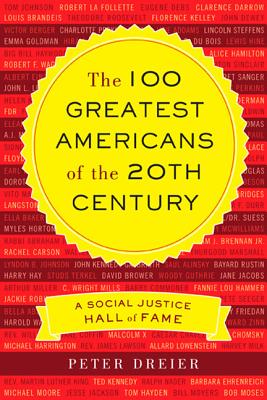
When Eisenhower nominated California’s Republican governor Earl Warren to be the Chief Justice in 1953, he thought he was appointing a conservative jurist. Later, Eisenhower reportedly said that appointing Warren, who took the Court in an unprecedented liberal direction, was the “biggest damn fool mistake” he had ever made. (Warren is one of the people I profile in my new book, The 100 Greatest Americans of the 20th Century: A Social Justice Hall of Fame).
John Roberts is certainly no Earl Warren. Indeed, his court has been one of the most conservative, pro-business courts in history… but we can be grateful for Roberts’ decision to side with the 5-4 majority to uphold the Obama health care reform law.
This is a big victory for progressive politics. The 2010 health care reform bill didn’t include everything we wanted, but it was an historic milestone. It has already relieved a great deal of heartache and suffering for millions and will do even more as the law is further implemented.
As I ask in my article in yesterday’s Huffington Post, “Why Did Roberts Side with Obama?” There will be many analyses of the Supreme Court’s ruling, including why Roberts not only sided with the majority, but chose to write the majority decision. I don’t think it had much to do with Constitutional matters. My own view is that Roberts was looking at history, at his legacy, and was concerned that future generations would look at the “Roberts Court” as simply a partisan, right-wing pro-corporate court, which it has been so far. Polls show that since Roberts became Chief Justice the American public has lost confidence in the Court. Perhaps he was tired of being seen as a clone of right-wing Justice Antonin Scalia, who wrote a wacko dissent attacking the majority ruling. (The other day, even before the latest ruling, Washington Post columnist E.J. Dionne called on Scalia to resign from the court).
And perhaps Roberts was taken aback by Obama’s State of the Union attack on the Supreme Court for its outrageous Citizens United decision, which has unleashed a flood of billionaire and corporate money into the current election contests, hijacking democracy in the process.
The Supreme Court ruling can only help Obama’s re-election effort against Romney. That can’t make George W. very happy.
Despite the Supreme Court ruling, however, the battle for health care reform isn’t over. Romney will continue to attack Obamacare — a remarkable act of hypocrisy given his role in pushing for a similar approach when he was Massachusetts governor. Republicans will run for Congress this year pledging to repeal Obamacare. Progressives and liberals will still need to mobilize support for the idea of universal health care.
We should learn some lessons from the 2009-2010 battle for health care reform, including the necessity of grassroots mobilization, as I wrote in an article in American Prospect two years ago. Check out this provocative article about what’s needed now, written by Richard Kirsch, who led the grassroots movement for health care reform as head of Health Care for America Now. When it comes to health care policy, the best analyst is my friend John McDonough, former head of Massachusetts Health Care for All, former health policy advisor to Ted Kennedy, and now a professor at the Harvard School of Public Health. His column, Health Stew, is required reading, including today’s blog on the Supreme Court ruling.